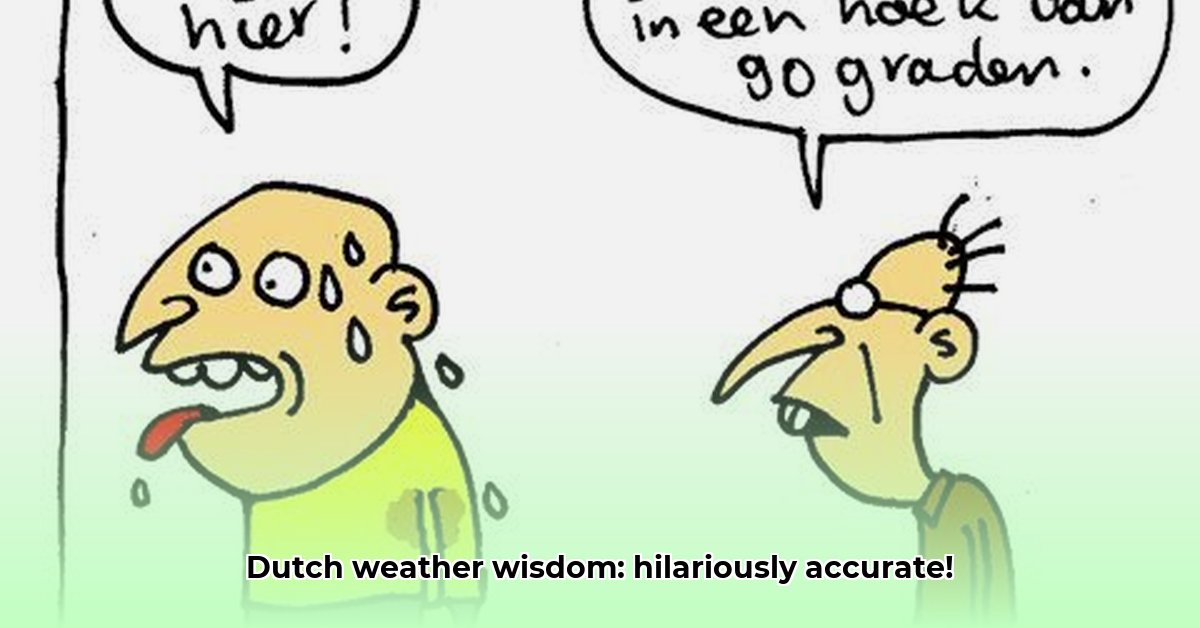
Warmte Grappig: Unearthing the Hilarious Wisdom of Dutch Weather Proverbs
Eish, have you ever wondered how the mense (people) in the Netherlands, those famously practical folk, dealt with their famously unpredictable weather before fancy weather apps? Long before the digital age, they relied on something far more charming – a treasure trove of quirky, often hilarious, weather proverbs! These weerspreuken (weather sayings) aren't just old wives' tales; they offer a fascinating glimpse into Dutch history, culture, and their unique relationship with the elements. Let's delve into this wonderfully weird world of Dutch weather wisdom and uncover its secrets!
A History Drenched in Rain and Basking in Sunshine
For centuries, the Dutch have crafted witty sayings to capture their unique relationship with the sun, wind, and rain. Passed down through generations, these proverbs are more than just weather forecasts; they're a window into their farming traditions, societal attitudes, and, importantly, their lekker (great) sense of humour. Think of them as an old-school meteorological system – a blend of keen observation, years of experience, and a generous dose of playful cynicism. Many surprisingly reflect long-term weather patterns, demonstrating a deep understanding of the natural rhythm of agriculture. But wag jou vingers nie (don't wag your fingers), because not every prediction hits the mark!
Predicting the Unpredictable: A Few Hits, Many Misses
Some proverbs, particularly those linked to specific dates (like the "Ice Saints" – May 11-13), are proving less reliable thanks to climate change. And some are just hilariously inaccurate! “If ducks quack in the reeds, it'll rain...or not,” perfectly captures the unpredictable nature of Dutch weather – and maybe duck behaviour too! This delightful mix of sharp observation and hilarious inaccuracy is what makes these proverbs so endearing. The Warmte Grappig (hilarious warmth) truly shines through their inherent uncertainty. But how much faith can we place in these old sayings? Let's investigate.
Decoding the Proverbs: A Closer Look at Some Examples
Let's examine a few examples, showcasing the wonderfully quirky range of these sayings. Get ready to be amused!
"September rain is a farmer's blessing": This proverb generally holds true, reflecting the vital role autumn rain plays in a successful harvest—a testament to generations of farmers’ keen observations.
"Red sky at night, shepherd's delight; red sky in the morning, shepherd's warning": A classic, surprisingly accurate in many cases, showcasing a perceptive awareness of atmospheric pressure shifts. This suggests centuries of shepherds carefully observing the skies.
"If the rooster in Rotterdam crows in Amsterdam in the morning, it blew a gale last night.": This one is pure Warmte Grappig – a magnificent exaggeration! It highlights the strong winds often experienced in the Netherlands. This playful exaggeration likely helped build community spirit.
"When the wind blows from the west, the weather is at its best.": This proverb reflects a common observation of prevailing winds bringing favourable conditions, pointing to weather's direct impact on daily life.
"A misty morning, an afternoon of sunshine.": This proverb reflects the often-observed quick weather changes, particularly in coastal areas, highlighting the dynamic nature of the Dutch climate.
But aren't modern weather forecasts far more accurate? Let's explore that.
Accuracy and Limitations: Fact vs. Folklore in the Age of Meteorology
Modern meteorology provides precise predictions, leaving less room for the whimsy of a proverb. Consider proverbs relying on celestial cues like sunsets. While a fiery red sky at night can indicate fair weather, it’s not a guaranteed prediction. So, while proverbs may hint at general trends, their detail is limited. It’s like comparing a detailed map to a rough sketch. How do these old beliefs stack up against the precision of hyper-local forecasts?
Beyond the Forecast: The Deeper Cultural Meaning
These proverbs are far more than just weather reports. They show a deeper relationship between the Dutch and their environment:
Resilience: Centuries of coping with unpredictable weather have fostered a resilient spirit—a humorous acceptance of the weather's whims.
Community: Sharing weather observations and proverbs strengthened community ties, creating a shared understanding and sense of belonging.
Agricultural Practices: The emphasis on agriculture in many proverbs underscores its historical importance to Dutch society.
The Big Picture: What We've Learned
Dutch weather proverbs offer a fascinating glimpse into the past, showcasing a unique cultural perspective on climate and nature. Even when inaccurate, they are a valuable historical record and a charming example of human ingenuity and humour. While modern meteorology provides precise forecasts, these proverbs remind us of the enduring charm of traditional wisdom. They're a testament to an enduring connection between humans and nature, highlighting the resilience and resourcefulness of the Dutch people.
Further Exploration: Delving Deeper into Dutch Weather Lore
Want to know more? There's a whole world of weerspreuken out there waiting to be discovered! Researching the regional variations and origins of these proverbs could shed further light on local meteorological traditions and cultural nuances. Furthermore, exploring the accuracy of these proverbs against historical weather records would offer a fascinating study in the interplay between folklore and scientific understanding. So, gaan maar voort (go ahead)! Explore the rich tapestry of Dutch weather wisdom!